
When women think about perimenopause, hot flashes, mood swings, and disrupted sleep usually come to mind. But there’s another symptom that can be equally disruptive: brain fog.
 Many women report difficulty focusing, remembering details, or keeping their energy levels steady.
This isn’t “just in your head.” Science now shows that perimenopause is a critical time for brain health and energy metabolism.
Why Brain Energy Declines in Midlife Women
Estrogen is not only a reproductive hormone — it’s also a neuroprotective hormone. It supports brain mitochondria, promotes synaptic plasticity, and helps regulate glucose metabolism. As estrogen begins to fluctuate during perimenopause, the brain literally produces less energy.
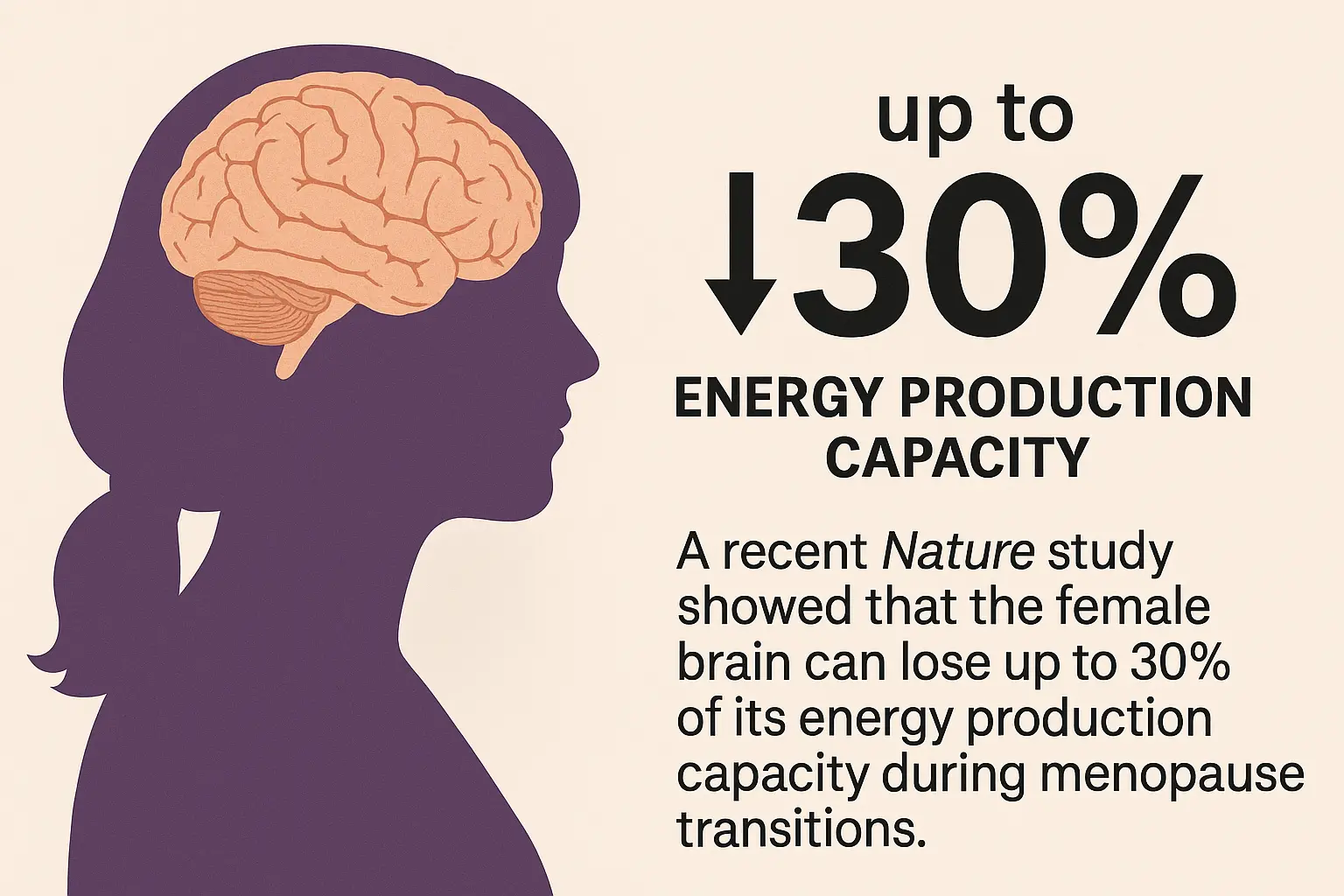
A recent Nature study showed that the female brain can lose up to 30% of its energy production capacity during menopause transitions. This helps explain why women may feel mentally drained even when physically healthy.
Dr. Lisa Mosconi, neuroscientist and author of The XX Brain, Brain Food and Menopause Brain, has long emphasized that menopause is as much a neurological transition as it is a hormonal one. Protecting brain energy at this stage is essential for long-term cognitive health.
What the Science Says
Research links perimenopause to changes in both brain structure and function:
- Cognition: Fluctuating estrogen is associated with lapses in attention, working memory, and processing speed.
- Neurodegeneration risk: Hormonal decline can accelerate pathways linked to Alzheimer’s disease.
- Exercise benefits: Aerobic and resistance training increase brain-derived neurotrophic factor (BDNF), which supports neuroplasticity and memory.
- Nutrition: Diets rich in omega-3 fatty acids, antioxidants, and polyphenols support brain resilience.
The MobiGym Approach to Brain Health
At MobiGym, we combine movement, nutrition, and recovery strategies to support your brain during this transition:
- High-Intensity Training – Stimulates BDNF and mitochondrial health.
- Strength Training – Improves insulin sensitivity, reducing brain energy dips.
- Biohacking Tools – Infrared therapy, PEMF, and breathwork to optimize energy metabolism and stress regulation.
- Nutrition Guidance – Supporting women with brain-healthy foods like EVOO, omega-3, and polyphenol-rich supplements.
Takeaway
Perimenopause is not just a hormonal journey — it’s a neurological shift. Supporting your brain during this stage means protecting focus, memory, and energy for decades to come. With the right training and nutrition, women can safeguard their cognitive vitality while navigating the challenges of midlife.
💡 Call to Action: Want to learn how your brain and body are adapting in this stage of life? Book your introductory session at MobiGym and discover how to future-proof your health.
References
- Mosconi, L. The XX Brain; Brain Food (Books and Interviews).
- Nature. You cannot have the same training results with a brain that potentially loses 30% of its energy. Link
- PubMed. Menopause and Brain Energy Metabolism. Link
- TaraMD. Exercise and Perimenopause. Link