
Perimenopause is a natural phase in a woman’s life, usually beginning in the 40s, where estrogen and progesterone levels fluctuate before menopause. While it’s a normal transition, the physiological changes can feel anything but. Many women experience fatigue, brain fog, mood swings, and hot flashes. But perhaps the most overlooked effects are the accelerated loss of muscle and bone — two foundations of long-term health and independence.
Why Exercise Matters More Than Ever
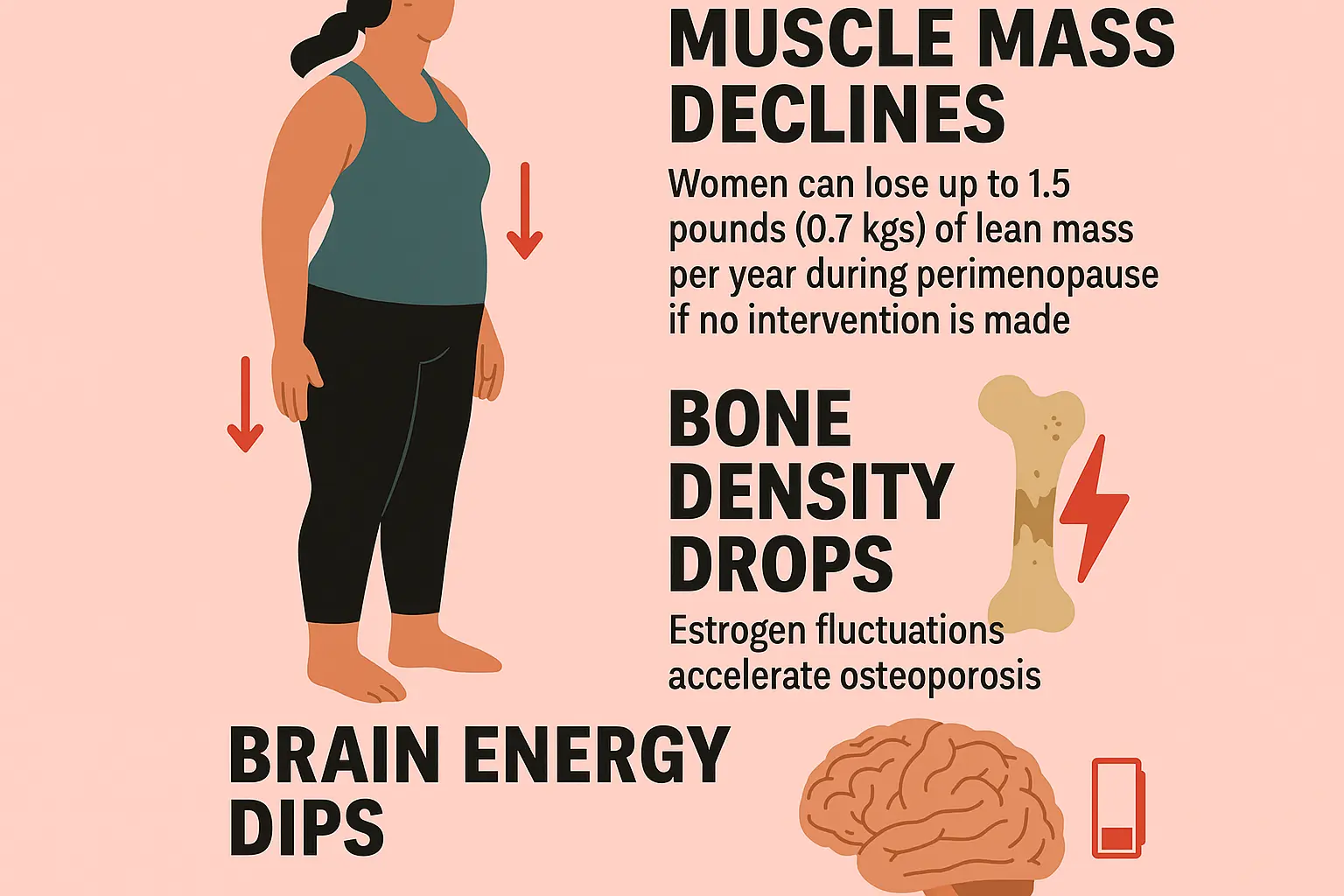
- Muscle declines: Women can lose up to 1.5 pounds (0.7 Kgs) of lean mass per year during perimenopause if no intervention is made.
- Bone density drops: Estrogen fluctuations accelerate osteoporosis risk.
- Brain energy dips: Research shows the female brain may lose up to 30% of its energy production capacity during menopause (Nature, 2024).
Without the right strategy, these shifts can snowball into frailty, poor balance, reduced mobility, and even cognitive decline. The good news? Exercise is one of the most powerful tools to slow or reverse these trends.
What the Science Says
Recent systematic reviews and randomized controlled trials highlight how different types of exercise benefit women in perimenopause:
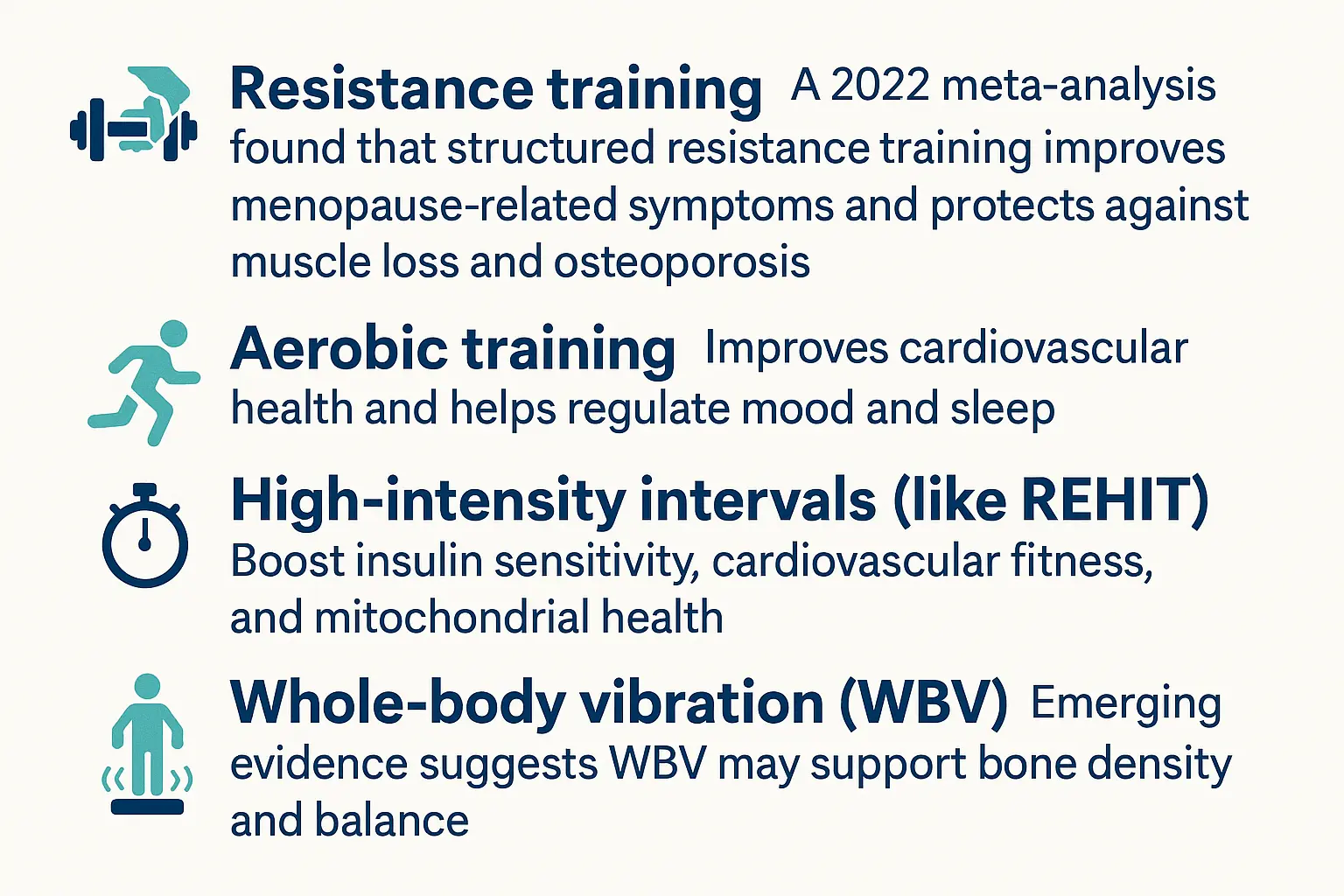
- Resistance training: A 2022 meta-analysis found that structured resistance training improves menopause-related symptoms and protects against muscle loss and osteoporosis.
- Aerobic training: Improves cardiovascular health and helps regulate mood and sleep.
- High-intensity intervals (like REHIT): Boost insulin sensitivity, cardiovascular fitness, and mitochondrial health.
- Whole-body vibration (WBV): Emerging evidence suggests WBV may support bone density and balance.
The key message: A mix of resistance and smart aerobic training is the gold standard.
The MobiGym Approach
At MobiGym, we bring science into practice. Our programs are designed specifically for busy professionals and adults 40+, making exercise efficient, safe, and results-driven. Here’s how we help women thrive through perimenopause:
- Adaptive Resistance Training – Safely builds strength in less than 20 minutes.
- CAROL REHIT Bike – A clinically validated way to train your heart and mitochondria in just 8 minutes.
- Whole-Body Vibration & Recovery Therapies – Supporting bone density, mobility, and stress resilience.
- Personalized Tracking – From muscle mass (BIA analysis) to biological age markers, we measure progress, not just effort.
Takeaway
Perimenopause is not the time to slow down — it’s the time to train smarter. The right exercise program can preserve muscle, protect bones, sharpen cognition, and improve mood. With evidence-based training and biohacking tools, women can not only navigate this transition but emerge stronger and more resilient.
💡 Call to Action: Curious about how to apply this to your own life? Book a free introductory session at MobiGym to discover your personalized longevity plan.
References
- Cureus. Impact of Exercise on Perimenopausal Syndrome: A Systematic Review of Randomized Controlled Trials. Link
- OBG Project. Meta-Analysis: Does Resistance Training Improve Menopause Symptoms? Link
- PubMed. Exercise and Perimenopause Studies. Link
- Nature. Brain Energy Decline in Menopause. Link
- TaraMD. Exercise and Perimenopause (Clinical Perspective). Link