
When it comes to measuring health, many people focus on weight, cholesterol, or blood pressure. But in recent years, researchers have identified another powerful biomarker that provides deep insights into metabolic health and longevity: the Triglyceride-Glucose (TyG) Index.
What is the TyG Index?
The TyG Index is calculated using just two routine blood values — fasting triglycerides and fasting glucose. This simple calculation serves as a reliable marker of insulin resistance, a condition that underlies many chronic diseases such as type 2 diabetes, cardiovascular disease, and even certain neurodegenerative disorders.
The most widely used formula is:

- Both lab values must be fasting.
- Units must be in mg/dL (if you use mmol/L for triglycerides or glucose, conversion is required).
- Enter the values, multiply them, divide by 2, and take the natural logarithm (ln).
Example:
If your fasting triglycerides are 120 mg/dL and fasting glucose is 90 mg/dL:

Because it uses common lab values, the TyG Index is accessible, cost-effective, and easy to integrate into regular health assessments.
What Do Different TyG Values Mean?
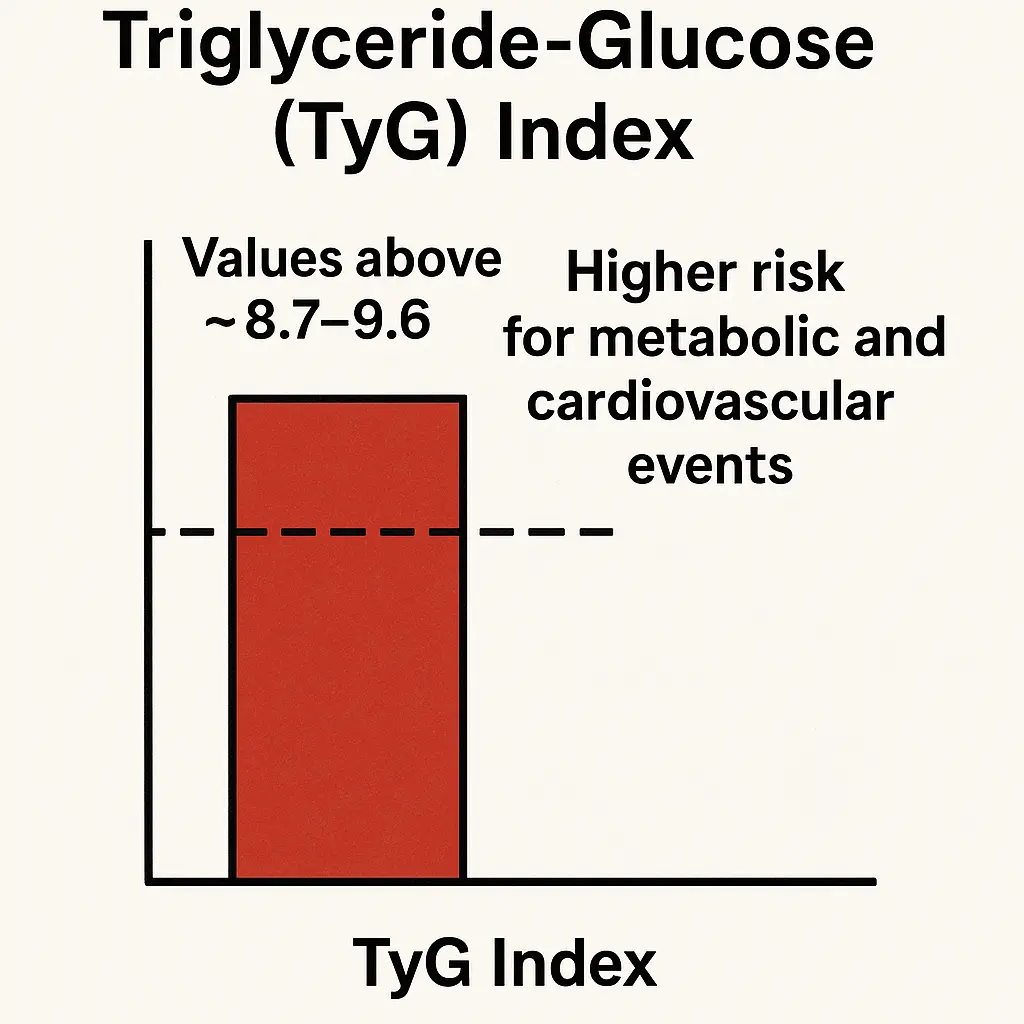
- Values above ~8.7–9.6 often mark higher risk for metabolic and cardiovascular events in adults.
- Some calculators and older publications use lower binning (e.g., >4.49 for insulin resistance), but these may use different formulas or populations.
- Always check that you're using the correct formula and reference range for your lab units.
Why the TyG Index Matters
Research shows that higher TyG values are strongly linked with:
- Insulin resistance and metabolic dysfunction
- Increased cardiovascular risk
- Higher incidence of type 2 diabetes
- Elevated risk of non-alcoholic fatty liver disease (NAFLD)
- Faster biological aging through impaired metabolic pathways
Unlike traditional glucose or cholesterol measurements alone, the TyG Index captures a more complete picture of your body’s metabolic flexibility — the ability to efficiently switch between energy sources.
The Science Behind the TyG Index
Multiple studies have validated the TyG Index as a robust surrogate for insulin resistance:
- A meta-analysis found that the TyG Index is closely correlated with results from the “gold-standard” hyperinsulinemic-euglycemic clamp test, but without the complexity or cost.
- Longitudinal studies link higher TyG scores with future onset of diabetes and heart disease, making it a powerful predictive biomarker.
- Recent research also connects the TyG Index with outcomes like arterial stiffness, kidney disease, and even mortality risk.
Nutrition Strategies
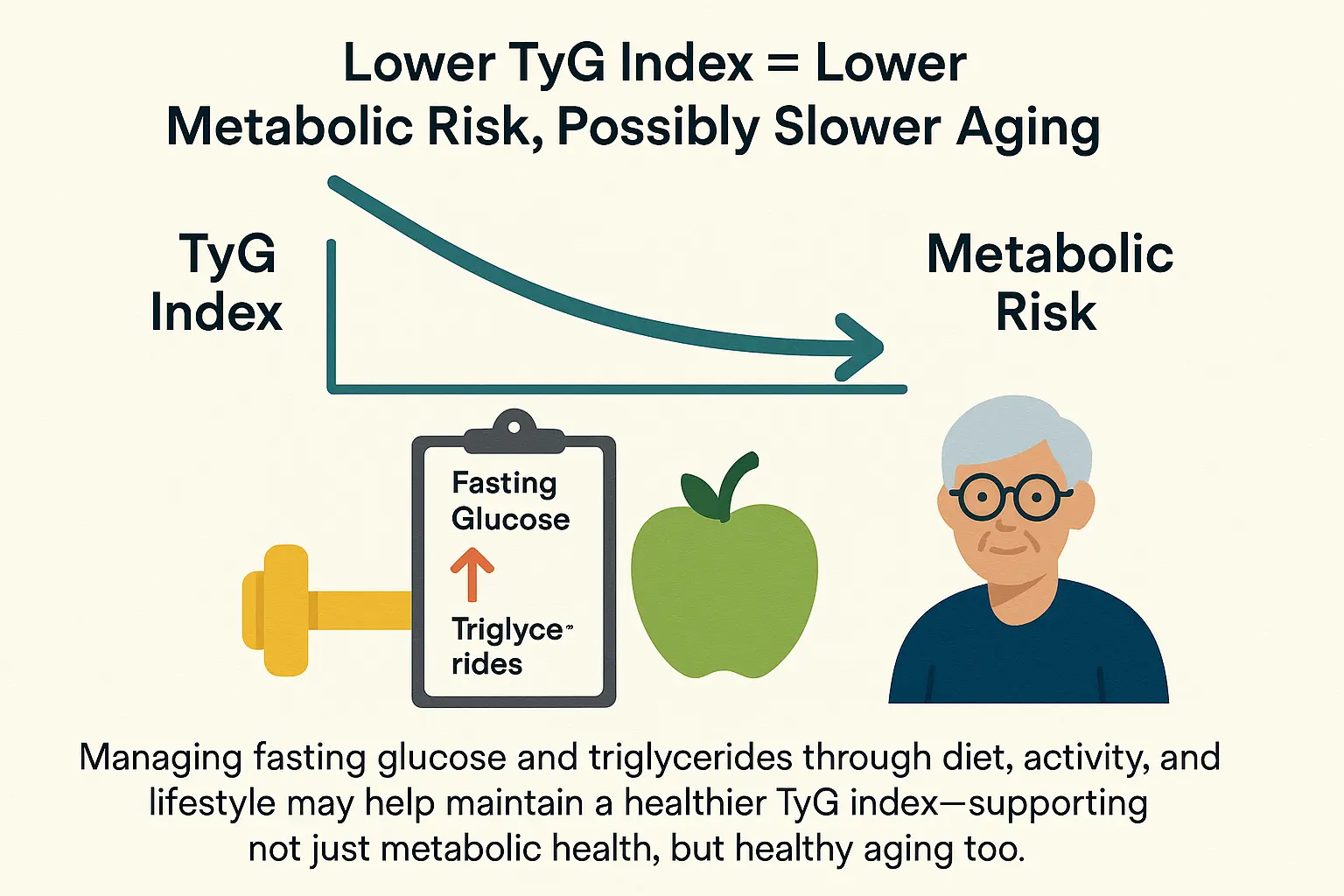
- Adopt a lower-carbohydrate and higher-fiber diet—Limit added sugars and simple starches, focus on whole grains, legumes, vegetables, berries, and citrus.
- Prioritize healthy fats—Eat oily fish (sardines, mackerel, salmon), nuts, seeds, and olive oil. Limit trans fats and excessive saturated fats.
- Include plant compounds and spices—Add cinnamon, leafy greens, and colorful fruits/vegetables to meals for antioxidant and metabolic benefits.
- Consider proven supplements—Fish oil (omega-3s), curcumin, fenugreek, and garlic extract may help lower fasting triglycerides.
Exercise and Lifestyle
- Engage in regular physical activity—Both aerobic (walking, cycling, running) and resistance training (weightlifting, bands, vibration) improve insulin sensitivity and glucose metabolism.
- Reduce sedentary time—Break up long periods of sitting with movement or brief exercise bouts.

- Incorporate stress management techniques—Meditation, deep breathing, and walking in nature can reduce insulin resistance.
- Ensure sufficient, good quality sleep—Studies show sleep duration and quality can mediate the effect of diet on TyG index; aim for at least 7–8 hours nightly.
Additional Tips
- Maintain a healthy weight—Even modest fat loss improves TyG index, insulin sensitivity, and overall metabolic markers.
- Limit alcohol—Minimize intake, as excessive alcohol worsens triglyceride and glucose profiles.
- Regularly monitor fasting values—Track triglycerides and fasting glucose; aim to keep TyG index below risk-relevant thresholds (e.g., <8.7 for high risk groups, <7.3 in young adults).
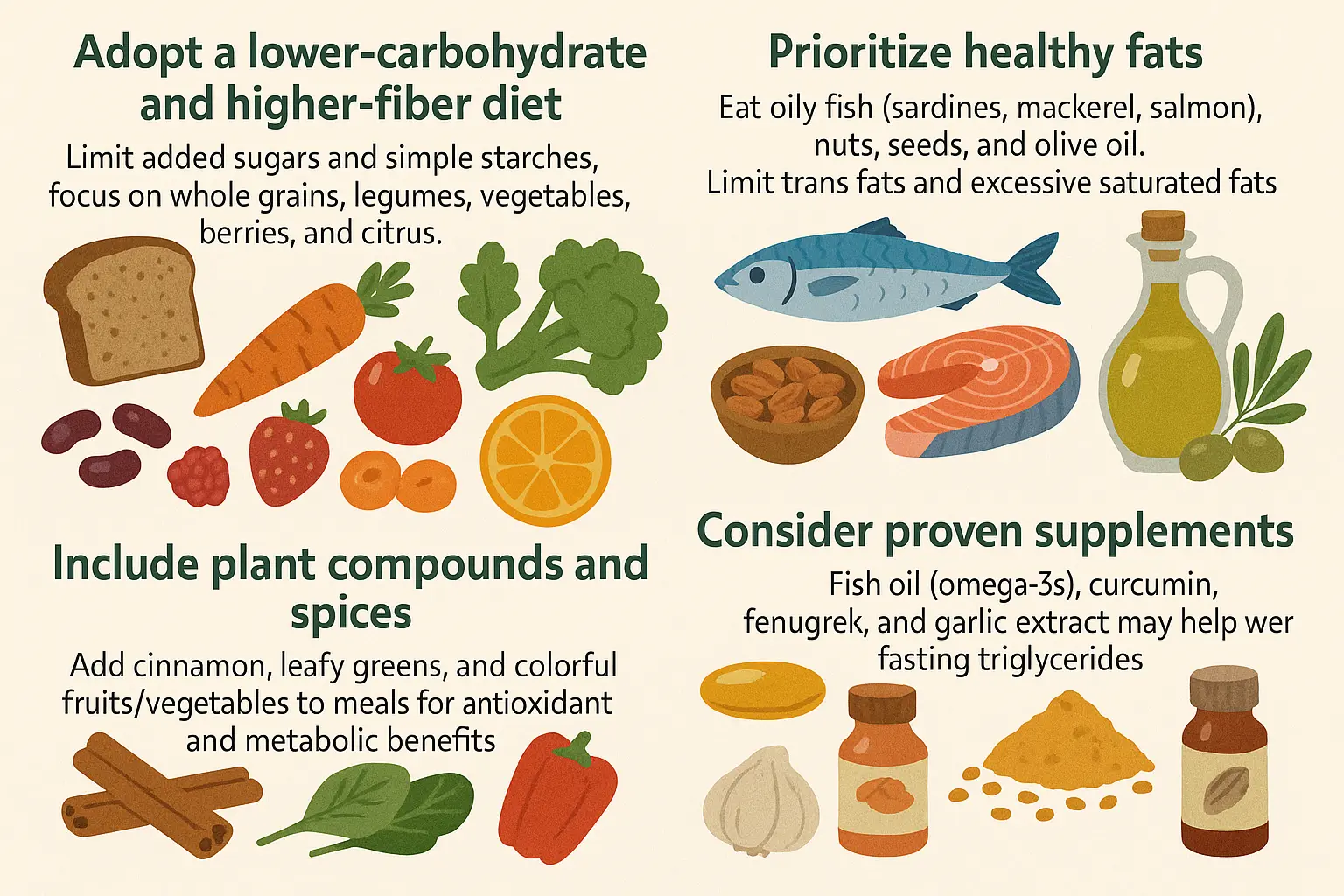
A comprehensive, sustainable approach using these strategies is key for long-term improvement in TyG index and slow-aging metabolic health.
How MobiGym Uses Biomarkers Like TyG
At MobiGym, we believe that what gets measured, gets improved. Monitoring biomarkers such as the TyG Index helps us and our clients stay ahead of potential risks. By combining science-backed assessments with personalized training, biohacking, and lifestyle protocols, we provide effective and efficient strategies to improve insulin sensitivity, metabolic health, and long-term vitality.
Tracking your TyG Index alongside other longevity biomarkers allows us to create a truly data-driven approach to extending your healthspan.
Call to Action
If you’re serious about optimizing your health, don’t wait for problems to appear — monitor them early. At MobiGym, we integrate advanced biomarker tracking, including the TyG Index, into our programs to ensure your progress is guided by science.
👉 Book your free introductory session today and discover how MobiGym’s longevity-focused training can help you live better, longer.
References
- Guerrero-Romero F, et al. "The product of triglycerides and glucose, a simple measure of insulin sensitivity." Comparative Studies in Metabolism.
- Sánchez‐Íñigo L, et al. "Triglyceride-glucose index as a biomarker for type 2 diabetes and cardiovascular risk." Clinical Investigation.
- Du T, et al. "Triglyceride-glucose index is a useful marker for insulin resistance and metabolic syndrome." Diabetology & Metabolic Syndrome.